The confusion between “since” and “sense” is one of the most common grammar mistakes in English learning.
These two words look and sound slightly similar, but their meanings are completely different. Many learners mistakenly use them in the wrong context, especially in writing, exams, and professional communication.
This confusion is part of broader challenges in the English language where learners struggle with homophones, spelling patterns, and context-based usage.
“Since” is used for time and reason, while “sense” refers to understanding, feeling, or perception.
In this guide, you will learn the exact difference between since and sense, their origins, pronunciation, usage rules, common mistakes, and easy memory tricks so you never confuse them again.
Since or Sense – Quick Answer
Since = Time / Reason
Sense = Understanding / Feeling
Simple Explanation
- Since is used when talking about time or cause
- Sense is used when talking about logic, feeling, or awareness
Examples
- I have lived here since 2015
- This idea makes sense
👉 Key Insight: Both words are correct, but context decides usage.
The Origin of Since and Sense
Origin of “Since”
The word since comes from Old English “sithens”, meaning “from that time onward.” It evolved into modern English usage for time reference and reasoning.
Origin of “Sense”
The word sense comes from Latin “sensus”, meaning feeling or perception. It developed into modern usage for understanding, awareness, and human perception.
British English vs American English Usage
There is no difference between British and American English in spelling or usage.
| Region | Since | Sense |
|---|---|---|
| UK | Same | Same |
| USA | Same | Same |
| Canada | Same | Same |
| Australia | Same | Same |
👉 Insight: Confusion is contextual, not regional.
Pronunciation of Since and Sense
Since
- Pronounced as /sɪns/
- Sounds like “sins”
Sense
- Pronounced as /sens/
- Sounds like “sents”
👉 Why confusion happens: Both sound very similar in fast speech.
Why People Confuse Since or Sense
- Similar pronunciation
- Fast typing and autocorrect errors
- Weak grammar foundation
- Homophone-like confusion
- Lack of contextual understanding
Which Word Should You Use?
Use “Since” when:
- Talking about time
- Giving reason or cause
- Connecting clauses
✔ Examples:
- Since 2020, I have lived here
- I left since it was late
Use “Sense” when:
- Talking about meaning or understanding
- Describing logic or feeling
✔ Examples:
- This makes sense
- He has a sense of direction
Common Mistakes with Since and Sense
❌ This does not make since
✔ This does not make sense
❌ I have sense yesterday
✔ I have been here since yesterday
❌ Sense of direction
✔ Sense of direction
👉 These errors are part of frequently confused English words.
Since and Sense in Everyday English
Emails
- Since your request is received, we are processing it
- Please check if this plan makes sense
Social Media
- I haven’t slept since Monday 😴
- This outfit makes sense 👍
News Writing
- Economy has improved since last year
- The decision does not make sense
Sense and Human Perception
The word sense connects strongly with human perception:
Five Senses
- Sight
- Hearing
- Smell
- Taste
- Touch
Common Expressions
- Common sense
- Sense of humor
- Sense of direction
- Sense of awareness
Easy Trick to Remember
👉 SINCE = TIME LINE ⏳
👉 SENSE = THINKING MIND 🧠
OR:
- Since = time start
- Sense = makes sense in mind
Since or Sense – Search Trends Insight
Users search this keyword because of:
- Grammar confusion
- Exam preparation
- Writing mistakes
- Similar spelling structure
Top countries:
- Pakistan
- India
- USA
- UK
- Canada
👉 Intent: Educational + grammar correction
Comparison Table: Since vs Sense
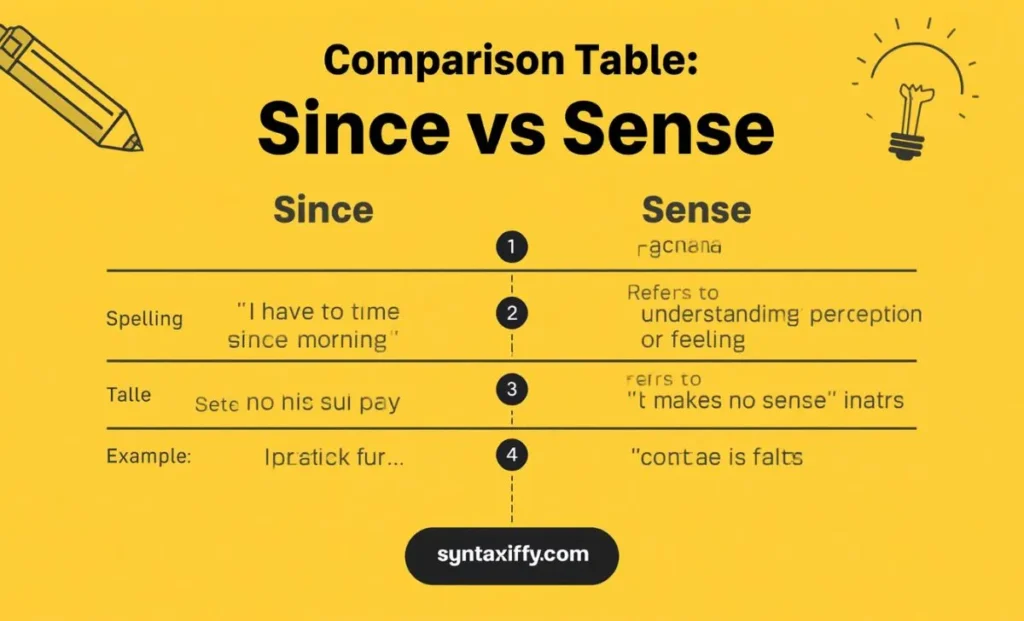
| Feature | Since | Sense |
|---|---|---|
| Meaning | Time / Reason | Understanding / Feeling |
| Grammar Role | Conjunction / Preposition | Noun / Verb |
| Usage | Time connection | Logic & perception |
| Example | Since 2020 | This makes sense |
| Confusion Level | High | High |
FAQs
1. Is it since or sense?
Both are correct but used in different contexts.
2. What does since mean?
It means time or reason.
3. What does sense mean?
It means understanding or feeling.
4. Why do people confuse them?
Because they look and sound similar.
5. Is sense noun or verb?
Both noun and verb.
6. Can since show reason?
Yes, it can show cause.
7. Can both be used together?
Yes: Since I studied, everything makes sense.
Conclusion
The confusion between since and sense is common but easy to fix. Since is used for time and reason, while sense refers to understanding and perception.
Both words are essential in English communication and appear frequently in academic and professional writing.
Once you understand their correct usage, you can avoid common grammar mistakes and improve your English accuracy and confidence.
Read More Blogs:

Hi, I am Bill Walsh, and I write clear and practical grammar blogs on Syntaxiffy.com.
I focus on English grammar, pair of words, and spelling differences to help readers improve their writing skills.